This summer, the lake everyone calls unpredictable behaved. The lake everyone calls stable did not.
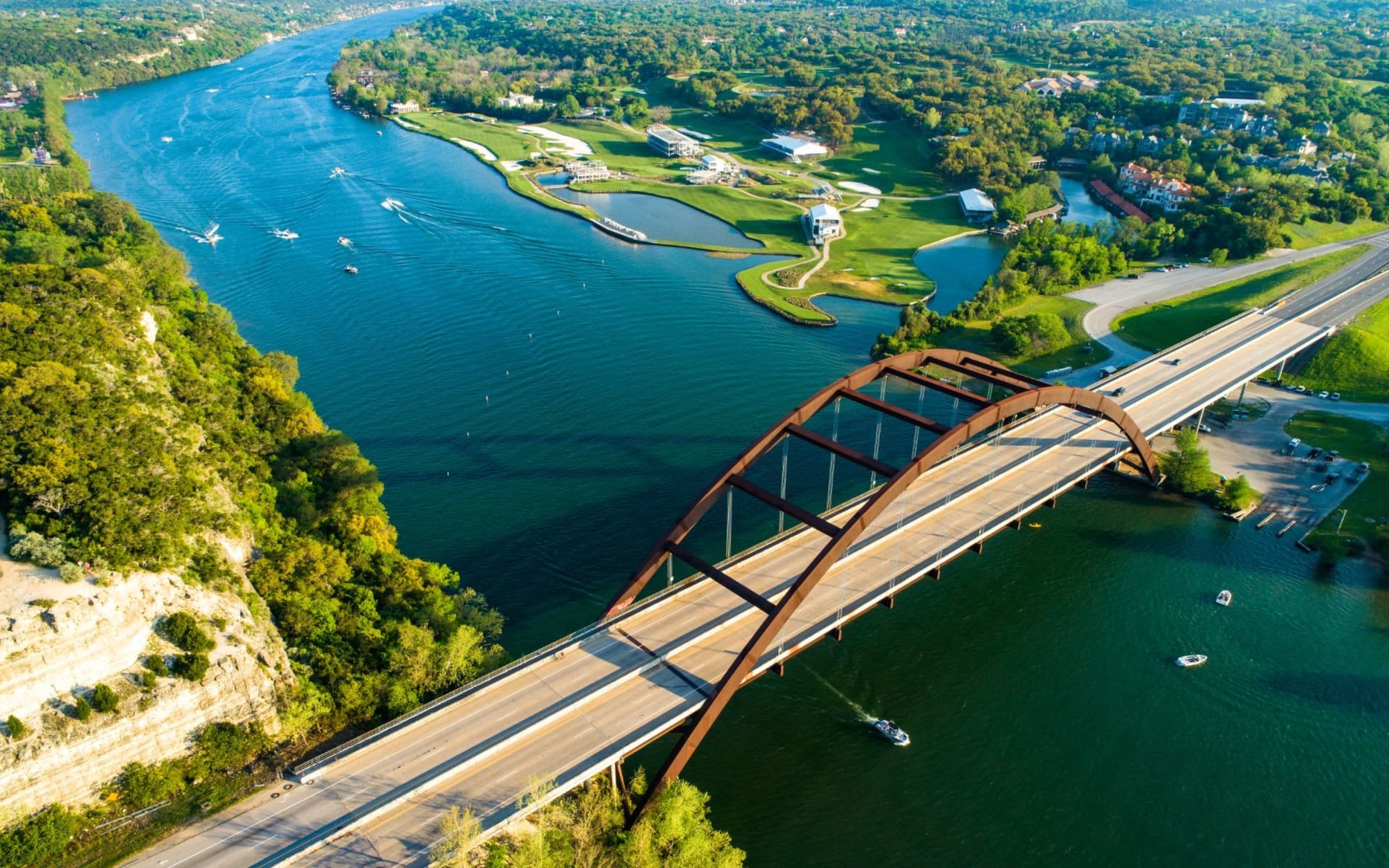
In mid-July 2026, heavy rain pushed Lake Travis to 684.7 feet above sea level, about 106.5 percent of its conservation pool and 3.7 feet above the official full-pool mark of 681 feet, forcing the Lower Colorado River Authority to run floodgates at Mansfield Dam and the City of Austin to ban boat traffic downstream while the water worked through the system. By August 16, the lake had settled to 98.2 percent full. Meanwhile, across the dam at Lake Austin, the water level barely moved, but the City's own Watershed Protection division has spent the summer discussing a planned drawdown, possibly this October or November, to let owners repair docks and bulkheads before the lake comes back up.
If you have been comparing these two lakes on price per square foot alone, you have been reading the wrong number. The real difference is not how much water is in front of the house. It is who decides how much water, on what schedule, and whether that schedule is one you can plan around or one that shows up with a summer storm.
The Numbers Everyone Quotes
The headline stats are real and worth having in front of you before anything else.
|
Lake Austin |
Lake Travis |
| Median sold price (waterfront) |
About $1.2M as of July 2026 |
$500K to $1.4M depending on community |
| Price per square foot |
About $597 as of July 2026, roughly 2.0x the City of Austin median of $302 |
Varies widely by cove and community |
| Active waterfront listings |
37 |
Dozens across Lakeway, Rough Hollow, Volente, Spicewood |
| Waterfront premium over comparable non-waterfront homes |
Not separately tracked at this granularity |
40 to 80 percent |
| Who permits your dock |
City of Austin |
LCRA |
| Lake type |
Constant-level, pass-through |
Flood-control reservoir |
That table offers a simple comparison: pay more, get closer to downtown, and get a lake with a steadier level. Two details deserve a closer look because they affect the ownership experience.
Whose Signature Is On Your Dock Permit
Here is the split almost nobody explains clearly to a buyer moving from out of state. The Lower Colorado River Authority built the entire chain of Highland Lakes, but it does not regulate every dock on every one of them. LCRA issues dock and marina permits on Lakes Buchanan, Inks, LBJ, Marble Falls, and Travis. On Lake Austin specifically, that job belongs to the City of Austin, through its Development Services and Parks and Recreation departments, working from Article 13 of the city's Land Development Code.
That is not a technicality. It means a dock dispute, a rebuild after storm damage, or a question about what you can add to an existing structure runs through two entirely different bureaucracies depending on which lake you buy into. On Lake Austin, the site plan review touches zoning, floodplain rules, tree protection, and even wave abatement standards, handled through the city. On Lake Travis, it runs through LCRA's Highland Lakes dock standards instead, and most residential docks under 1,500 square feet don't need an LCRA permit or fee at all.
There is a second wrinkle specific to Lake Austin that a lot of listing copy glosses over: submerged-land ownership is a title question. Buyers should review county deed records before writing an offer. Some current listings market deannexation as a selling point.
The Fact That Should Change How You Read "Constant Level"
Lake Austin is technically a pass-through lake with no capacity to store floodwater, and the city maintains it at a steady elevation on purpose. That's true, and it's why the lake supports fixed docks and predictable shoreline in a way Lake Travis simply cannot.
One important distinction is that "constant" doesn't mean "untouched." The city's Lake Austin Stakeholder Group, which meets quarterly with community members drawn from neighborhood, environmental, and boating interests, has spent 2026 weighing a scheduled drawdown for this coming October or November. The point of the drawdown is maintenance: giving owners a chance to work on docks and bulkheads while the water is temporarily lower, and giving the city a window to manage lakebed vegetation. A June 2026 Texas Parks and Wildlife survey found 575 acres of hydrilla in the lake, down from 592 acres in February, alongside 75 acres of Eurasian watermilfoil, up from 58. Both are being watched as part of the same conversation about whether a drawdown makes sense this year.
None of that is alarming on its own. It is normal lake stewardship. But it means the "stability" a Lake Austin buyer pays a premium for is really a promise about jurisdiction and predictability, not a promise that the water line never moves.
The Number That Actually Moves Value on Lake Travis
If Lake Austin's risk is a scheduled maintenance event, Lake Travis's is a live variable tied to rainfall. The pattern that matters for buyers here: every six feet of elevation drop has correlated with roughly a 3.5 percent decrease in waterfront property values. During the severe 2011 to 2015 drought, that compounded into waterfront value declines of 25 to 40 percent. Right now, with the lake at 98.2 percent full after a wet July, conditions favor sellers. That will not last forever, and a buyer comparing a list price against comps from a dry year, rather than this one, is comparing against the wrong baseline.
This is also where entry price and scale genuinely diverge. As of May 2026, Lakeway had about 26 waterfront listings at a median list price near $749,000, sitting on the market for around 121 days, well above typical turnover for the price point. That is a real opening for a patient buyer. Meanwhile Spicewood's Travis Club, a 1,500-acre development with a Beau Welling-designed championship golf course opening in mid-2026, represents the newer luxury push further out on the lake. At the same time, large new communities inland in Dripping Springs, including Double L Ranch, Wild Ridge, and Big Sky Ranch, offer an alternative to Lakeway for buyers prioritizing a newer build and a lower tax bill over lake proximity.
Lake Austin, by contrast, isn't absorbing that kind of competition. Its supply is structurally capped by geography: steep banks and protected coves. That scarcity is part of why four of Austin's ten highest residential sales in 2025 sat on Lake Austin, including the year's top trade near $16.9 million. As of May 2026, asking prices on the lake included a $15 million listing on Edgewater Drive and a $19 million listing on Rockcliff Road, plus an assemblage on Bruton Springs designed by architect Michael Hsu, suggesting that ceiling is still rising in 2026.
Before You Write an Offer on Either Lake
- Confirm which agency issues the dock permit for the specific parcel. City of Austin for Lake Austin. LCRA for Lake Travis, Buchanan, Inks, LBJ, and Marble Falls.
- On Lake Travis, price the comp against a range of water levels, not just today's reading, using the roughly 3.5 percent per six-foot relationship as your sensitivity check.
- Ask whether the parcel sits inside city limits, unincorporated county, or has been deannexed.
- Verify flood insurance requirements against the property's actual FEMA zone and elevation rather than assuming waterfront means automatic coverage either way.
The Real Choice
Lake Austin sells proximity and a single, known regulator. Lake Travis sells scale, more entry points, and a lifestyle built around bigger water, at the cost of a level that genuinely rises and falls with the weather. Neither is the safer bet in an absolute sense. They are different bets, on different kinds of variability, and the price gap between them is the market's honest attempt to price that difference.
If you are weighing a purchase on either lake, whether it's a close-in Lake Austin property near Tarrytown and the Rob Roy Peninsula or a waterfront lot further out toward Lakeway and Spicewood, the diligence that protects you isn't a better view of the comps. It's the dock file, the deed, and knowing which office to call before you're under contract, not after.
Soud Twal works both lakes regularly, from close-in Lake Austin estates to Lake Travis waterfront and the hill country beyond, and can walk you through permit status, deannexation questions, and current pricing on either shoreline before you make an offer. Book a consultation to talk through your specific parcel.
This article is general information, not legal, tax or financial advice. Consult a qualified professional about your situation.