"We're not opposed to a drawdown; I think it's a good idea. We're in favor of it." Jonathan Coon, a Lake Austin resident who has pushed for years to get the lake's water level lowered, said that in early September. Three weeks later, the drawdown he wanted got called off anyway. Not because the city changed its mind about whether a drawdown made sense. Because the six-week window that worked for docks and hydrilla didn't work for anyone who makes money on the water in October and November.
If you live on or near Lake Austin, you've probably already heard the headline: the fall drawdown that was locked in on August 20 got canceled on September 25. What's harder to find in the quick-hit coverage is why the timing problem turned out to be unsolvable, and what the city's own vegetation data says about whether the drawdown would have delivered what homeowners actually wanted from it.
What Was Actually Supposed to Happen
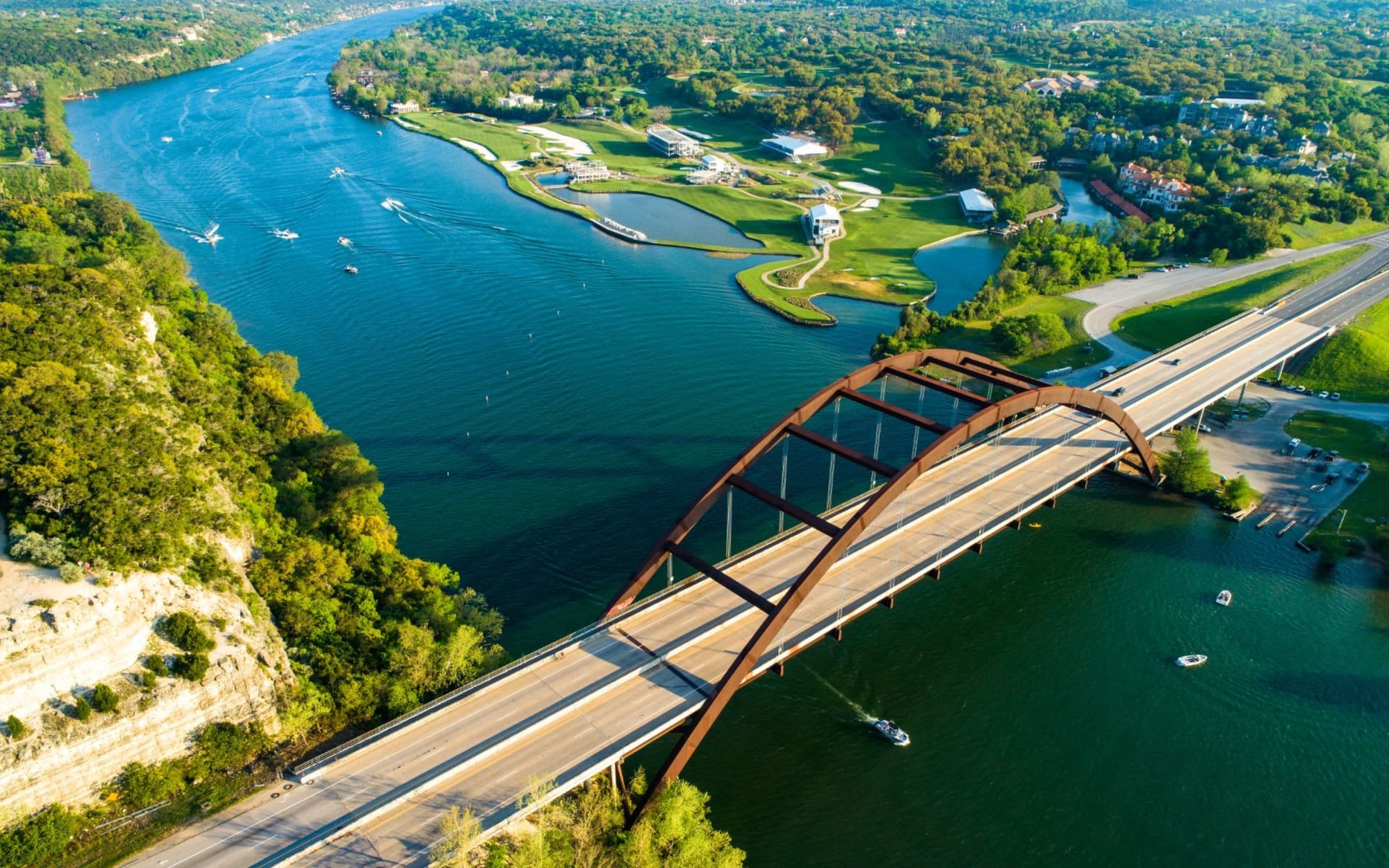
The plan, announced jointly by the City of Austin and the Lower Colorado River Authority, was specific down to the foot. Starting October 12, LCRA would lower Lake Austin between Mansfield Dam and Tom Miller Dam by no more than a foot a day, aiming for a target range of 481.8 to 482.8 feet above mean sea level. That's roughly 10 feet below normal pool. Depending on weather, reaching that level was expected to take about three weeks, with the lowered level held through late November before refilling began around November 24 at up to two feet a day.
While the lake sat low, public boat ramps along Lake Austin would have closed and swimming would have been banned at Emma Long Metropolitan Park for the duration. Shoreline property owners would have gotten a real, if temporary, chance to reach docks, bulkheads and boat slips that are normally underwater, work the city's Austin Fire and Austin Parks & Recreation departments also wanted for their own maintenance backlog. The city was even building a dedicated Site Plan Exemption permit specifically for minor dock and bulkhead repairs during the drawdown window, and held a public open house on September 9 at the Permitting and Development Center to walk residents through it.
This would have been the first drawdown on Lake Austin in nearly 10 years. The lake used to come down almost every year in the early 2000s, eight times between 2001 and 2011. Since then, there's been exactly one, in January and February of 2017. The scarcity is part of why this fall's version generated so much attention on both sides.
Four Weeks That Cost Too Much to Close
LCRA approved the plan on August 20, and city staff briefed council on it six days later at a Climate, Water, Environment and Parks Committee meeting. That's where David Callejas, who owns Float On Boat Rentals, a family business running 18 boats and employing 25 people on the lake, made the case that closing public access for six weeks starting in mid-October would hit the business at exactly the wrong moment.
He wasn't arguing against the maintenance need. He was pointing at the calendar. October and November on Lake Austin aren't a quiet stretch, they're stacked with fall wedding bookings, a University of Texas football season that fills the area every home Saturday, and the Formula 1 weekend at Circuit of the Americas, one of the highest-traffic tourism events Austin has all year. Businesses whose entire annual revenue leans on those weeks said a mid-October closure would land squarely on top of their busiest stretch, not around it.
LCRA tried to find a workaround. When the fall dates ran into pushback, LCRA proposed sliding the start to December 1 instead. That ran straight into Mozart's Lake Austin Festival of Lights, which by mid-September was already selling $300 tickets for its donut-shaped boats for this year's event. A drawdown over the holidays would have closed the lake during one of its own signature seasonal draws.
With fall and the holidays both off the table, the city announced on September 25 that there would be no drawdown of Lake Austin in 2026. Assistant City Manager Mike Rogers put it plainly in the memo to council: the city would keep evaluating economic, operational, environmental and community considerations before trying again. For property owners who'd already applied and paid for the new site-plan exemption permits anticipating the October start, the city said it would work through refunds on those fees.
The Hydrilla Case Was Thinner Than the Debate Suggested
Underneath the scheduling fight was a second argument that got less attention: whether lowering the lake would have actually solved the hydrilla problem it was partly sold as fixing.
The Texas Parks and Wildlife Department surveys Lake Austin's aquatic vegetation twice a year. Its mid-February 2026 survey found 592 acres of hydrilla and 58 acres of Eurasian watermilfoil, with hydrilla covering roughly 37 percent of the lake. By the time the June survey came back, the city's own memo to council described "no change" in the combined footprint of the two invasive species since February. The more recent read on the city's Lake Austin watershed page puts June's numbers at 575 acres of hydrilla and 75 acres of watermilfoil, hydrilla ticking down slightly while milfoil ticked up, with a real decrease noticeable near Ski Shores offset by expansion around Bull Creek and inside Bee Creek Cove. Overall, the invasive footprint held roughly steady for four straight months.
That matters because the drawdown itself was never billed by city staff as a hydrilla fix. Root systems of hydrilla survive a lake drawdown, and in past cycles the exposed plant has come back stronger once it loses competition from other vegetation that doesn't tolerate drying out as well. The actual long-term strategy the city is running is a stocking program of sterile grass carp that eat hydrilla preferentially. That program moves independently of any drawdown decision. In November 2025, the city added 1,955 grass carp, bringing the standing population to about 2,300. This past May, another 2,790 went in at Jessica Hollis Park and the Walsh boat ramp. Roughly 5,000 fish is the number officials consider a safe long-term population, as long as there's enough hydrilla in the lake to sustain them. Herbicides aren't part of the plan at all: Lake Austin is narrow, densely developed along its shoreline, and supplies two of the city's major drinking water treatment plants, which rules out chemical treatment outright.
So even in a version of this fall where the calendar hadn't gotten in the way, the vegetation homeowners have been fighting probably wasn't going away because the lake came down for six weeks. The one thing the drawdown reliably would have delivered was dry dock and bulkhead access for repair work, which is a real and valuable thing on its own, just not the same thing as a hydrilla solution.
Why January Isn't Coming Either
Once fall and December were both ruled out, stakeholders pushed for the option that used to be standard: a January or February drawdown, the timing every pre-2011 drawdown actually used. LCRA said no to that too. Following Winter Storm Uri in 2021, LCRA no longer schedules lake drawdowns during winter months, full stop, because the hydroelectric generators along the Highland Lakes need to stay available to support the Texas grid during cold-weather demand spikes. Stakeholders specifically asked about January and February 2027 as an alternative. That request was denied for the same grid reliability reason.
That leaves the city with a genuinely narrow set of remaining windows going forward, since the memo also notes that any future drawdown will be considered no more than once every four years under normal operating conditions. Winter is closed off by grid rules. Spring risks harming spawning fish and creates erosion exposure on an exposed lakebed during storm season. Summer runs into peak boating and the same power-generation constraints as winter. That's most of the calendar already spoken for before business impact even enters the conversation.
What This Means for the Water This Fall
For anyone who lives on Lake Austin, the practical read is straightforward. The lake stays at normal pool through October and November. Boat ramps stay open. Emma Long stays open for swimming. Whatever hydrilla and milfoil situation your stretch of shoreline has right now, near Ski Shores or up around Bull Creek and Bee Creek Cove, is roughly the situation you'll still have this boating season, since the grass carp program that's actually managing the invasive vegetation keeps running on its own separate timeline regardless of what happened with the drawdown decision. Docks and bulkheads that needed the dry-lakebed access this fall will keep waiting, and property owners who already paid into the canceled permit process should expect the city to follow through on those refunds.
None of this is dramatic if you're just trying to get your boat out this weekend. It's a bigger deal if you've been planning repair work around a drawdown window that's now gone for at least another year, and possibly longer given how few slots the calendar and the grid actually leave open.
If you're weighing dock or bulkhead work on Lake Austin and want a read on how the stakeholder process and permitting timeline might affect your specific stretch of shoreline, Soud Twal has been tracking these meetings and is glad to walk through what it means for your property.